
Inside a class
How an Eloqova class works
Every Eloqova class is live and 1:1: one child, one trainer, and a lesson built around stories and real speaking tasks. Here is what your child does in class, what they practise between classes, and what you see as a parent.
A lesson world for every age
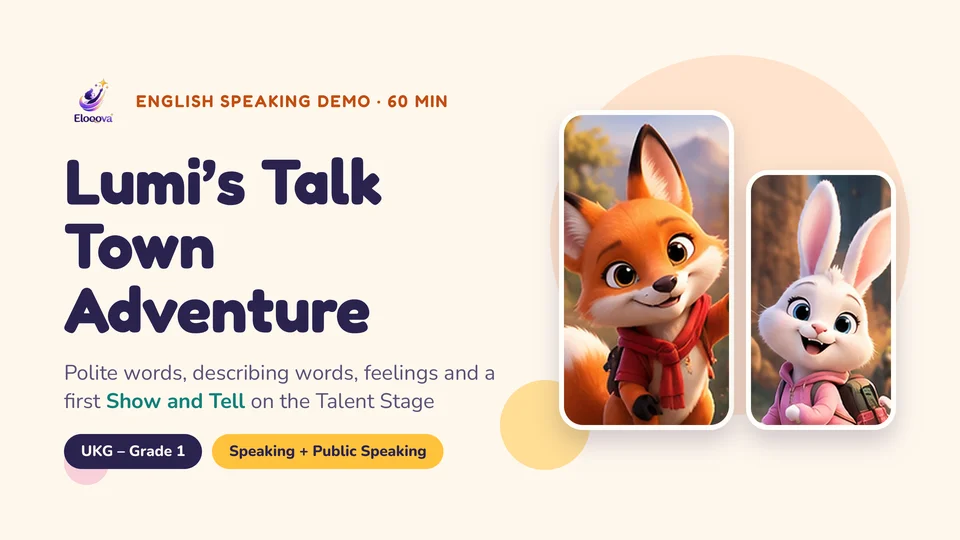
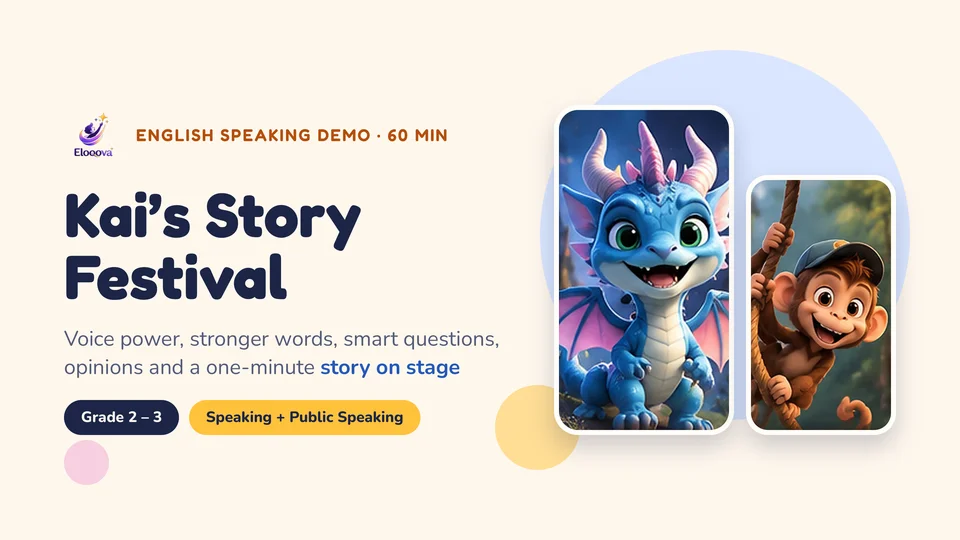
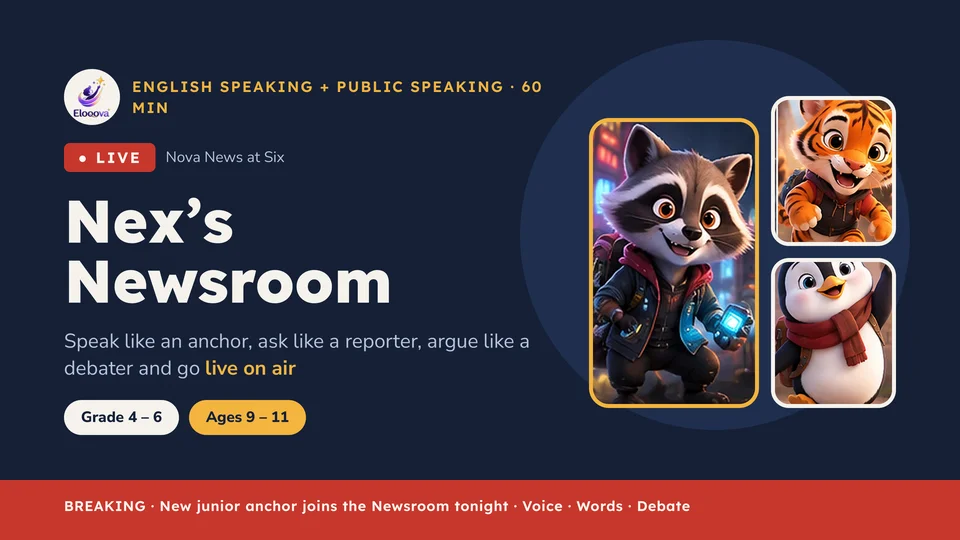
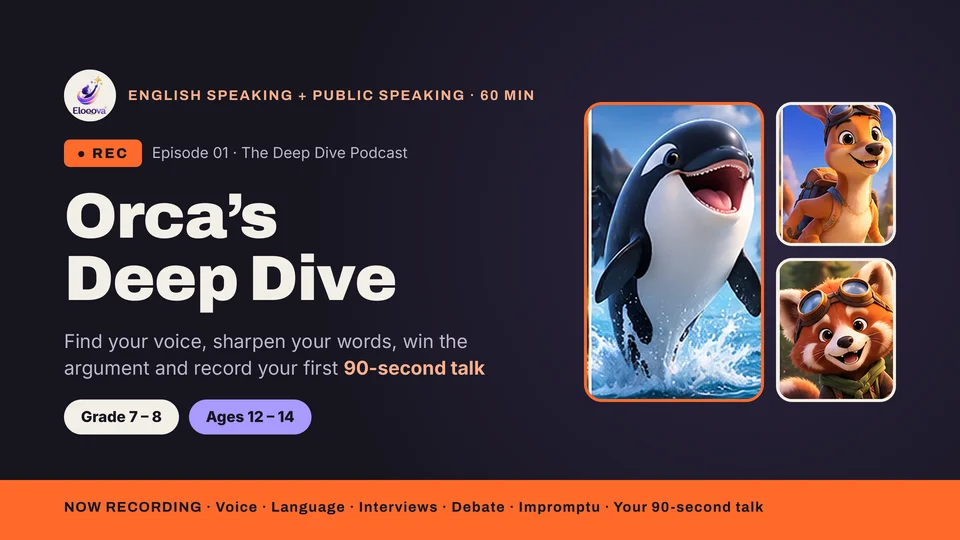
Children learn best when they care about the story. Each grade band has its own lesson world with characters, missions and a stage moment at the end. These are the opening lessons your child sees in the demo session.
What happens in a 60-minute class
- Warm-up (5 min): A quick speaking game so your child is talking from the first minute.
- Skill of the day (15 min): One clear skill, such as a strong opening, pauses or describing words, shown with examples.
- Guided practice (20 min): Your child uses the skill in stories, role plays and games, with the trainer coaching in the moment.
- Stage time (15 min): A short talk, story or debate point on camera, followed by two strengths and one thing to improve.
- Wrap-up (5 min): A practice task for home and a quick note for parents.
Because the class is 1:1, your child does most of the talking. The trainer adjusts the pace and topics to your child, so a shy UKG child and a Grade 8 debater get very different classes.
Practice between classes
- A short worksheet or speaking task after each class, about 10 minutes a day.
- Recorded practice your child can share with the trainer for feedback.
- Printable sheets like our free phonics and speech worksheets.
What parents see: the progress report
Parents get a progress report every week and a fuller one every month. It shows what your child did well, what to work on next and how to help at home. Here is what a weekly report looks like.
| Skill | This week | Next step |
|---|---|---|
| Confidence on camera | Looked at the camera for most of the talk; smiled at the start | Keep eyes up during the last line |
| Voice | Clear and loud enough throughout | Slow down when saying dates and names |
| Structure | Used a hook question to open | Add one example before the conclusion |
| Vocabulary | Used 3 new describing words correctly | Practise the 5 words on this week's sheet |
How it starts
- Book a free 1:1 demo session. Pick a time and tell us a little about your child.
- The demo (about an hour). Your child tries the opening lesson of their lesson world with a trainer.
- Your child's plan. The trainer shares strengths, gaps and a suggested plan with you.
Explore the programmes: public speaking, spoken English, communication skills, personality development and phonics. Or read about Eloqova.